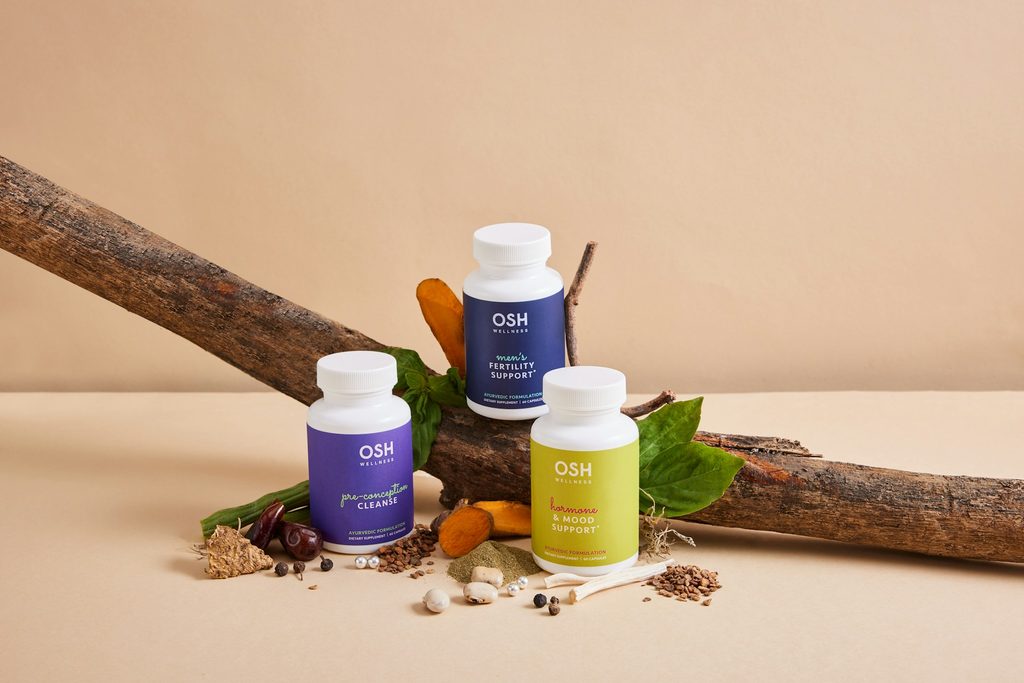
Not Selling Supplements!
Yes, the supplement market is ridiculously crowded. That doesn’t mean there isn’t room for you. It means you need a better reason for people to choose you.
Not In the Supplement Business? Keep Reading.
This article is about supplements, but the strategy isn’t.
The same approach can work in almost any ridiculously crowded niche: weight loss, pets, beauty, crafts, gardening, personal finance, travel, software, fitness, online marketing and plenty more.
The secret isn’t finding a market with no competition.
It’s finding something the competition isn’t doing very well.
- A customer being ignored.
- A confusing buying decision nobody explains clearly.
- A smaller niche hiding inside the big one.
- A useful tool nobody has built.
- A question everyone answers badly.
As you read, mentally replace the word “supplements” with your own niche and keep asking:
“What could I do differently here?”
Because you don’t necessarily need an undiscovered market.
You need an underserved corner of a market that already exists.
Let’s say you’re thinking about entering the gazillion-dollar supplement niche. Then you look around. There are enormous supplement companies. Thousands of Amazon products. Doctors on YouTube. Fitness influencers on TikTok. Affiliate sites everywhere. Reddit discussions about practically every ingredient ever put into a capsule.
Your first thought might reasonably be: “There’s no room left for me.”
I don’t think that’s necessarily true. But I also wouldn’t launch another website called something like Best Supplements Today and start publishing articles titled “10 Best Supplements for Energy.” That’s the part of the market I’d avoid.
The opportunity isn’t becoming another supplement seller or another website recommending products. It’s becoming the person who makes this ridiculously confusing market easier to understand. And that’s something a solo marketer can realistically build.
The Crowded Market Is Actually Part of the Opportunity
Think about the problem from the customer’s perspective. They aren’t suffering from a shortage of supplements… They’re suffering from too many choices.

Search for magnesium and you’ll find glycinate, citrate, oxide, malate, threonate and several other forms. Then there are different doses, serving sizes, certifications, additives, prices and claims. One bottle costs $12. Another costs $49. Why? Is the expensive one better? Is the dosage comparable? Does “500 mg” on one label mean the same thing as “500 mg” on another? Which claims actually have decent evidence behind them?
That’s where you come in.
Instead of asking, “How can I compete with 10,000 supplement websites?” ask, “What part of buying supplements is still unnecessarily difficult?”
Now you’re on the right track.
Don’t Own “Supplements,” Own Something Smaller
This is probably the most important decision you’ll make. Don’t start by trying to become an authority on every supplement for every person. That’s enormous.
Start ridiculously narrow. Maybe your site is about magnesium supplements. Or supplements for runners over 40. Or third-party-tested supplements. Or supplements for vegans. Or affordable supplements for people who don’t want to spend $200 a month. Or evidence-based supplementation for healthy aging.
And here’s a particularly interesting niche hiding in plain sight: Healthy longevity.
Consumers aren’t simply interested in living longer; increasingly, they want to remain active, sharp and independent while they do it. According to NielsenIQ data cited by Brand Innovators, 57% of consumers say they’re prioritizing “aging well” more than they were five years ago. That’s a substantial shift, and it creates opportunities well beyond simply recommending another bottle of vitamins.
A marketer could specialize in researching supplements associated with healthy aging, comparing products and ingredients, translating confusing claims, creating longevity-focused newsletters and buyer’s guides, or building resources for people trying to separate promising science from very expensive wishful thinking.
The opportunity isn’t to promise people they’ll live to 120. It’s to become the trusted guide for consumers who are already spending money trying to make their later years healthier ones.
There’s an advantage to going narrow: You can become unusually useful much faster.
Imagine two websites. One has 2,000 generic articles about every imaginable health topic. The other has tested, photographed, researched and compared 75 magnesium products.
Which one would you trust when you’re standing in a store wondering which magnesium to buy?
Exactly.
Become the Consumer Reports of Your Tiny Niche
This is one of my favorite approaches. Don’t merely recommend products. Compare them.

Create charts showing ingredient form, amount per serving, number of capsules required, price per serving, price per meaningful unit of ingredient, other ingredients, third-party certifications, subscription requirements, return policy and manufacturer transparency. Then explain what those differences actually mean.
Here’s where a solo marketer can beat much larger websites: Do the work they aren’t doing.
Buy the products. Photograph the bottles yourself. Read the labels. Contact manufacturers when something isn’t clear. Save their responses. Check whether formulas have changed. Calculate the actual cost per serving instead of simply repeating the bottle price. Look for independent certifications and testing where appropriate. Link readers to credible underlying research.
When the evidence for something is weak, say so.
In other words: Bring receipts.
Build a Supplement Label Translator
Here’s another business idea I particularly like: Become the person who teaches consumers how to decode supplement labels.
You could explain serving sizes, proprietary blends, ingredient forms, certifications, additives and confusing dosage terminology. Then build simple tools around those problems.
Imagine a magnesium comparison calculator where someone could compare products by cost per 100 mg of elemental magnesium. That’s much more useful than another article called The 17 Benefits of Magnesium.
Or create a searchable database where readers can filter products according to what matters to them. Now you’re building something competitors can’t reproduce by asking AI to write another article. You’re building an asset.
Use Affiliate Marketing : But Don’t Let It Control You
Affiliate commissions are an obvious monetisation method. Someone reads your comparison, clicks through to a retailer and purchases a product. You receive a commission. Nothing wrong with that.
But there’s a trap. If Product A pays you 3% and Product B pays 12%, you cannot suddenly discover that Product B is “better.”
Your credibility is worth considerably more than today’s commission. I’d establish an editorial rule early: Products don’t rank higher because they pay more.
Say that publicly. Clearly disclose affiliate relationships. And be willing to recommend a product that doesn’t pay you anything when it’s genuinely the better choice. That may cost you $4 today and earn you a loyal reader for five years.
Don’t Just Publish Articles… Build Tools
This is increasingly important. Information itself is becoming incredibly cheap. Google can summarize it. ChatGPT can explain it. Thousands of websites can rewrite it.
So ask: “What can I create that people will actually want to use?”
Maybe it’s a supplement comparison database, price-per-serving calculator, label-reading checklist, third-party certification directory, “compare these two products” feature, formulation-change tracker, weekly price alert or printable supplement shopping worksheet.
Some of these could be free traffic generators. Others could eventually become paid membership features. The point is to create reasons for someone to bookmark your website and come back.
Build an Email List from Day One
This part matters. Don’t spend two years building Google traffic and assume Google will always send those visitors back. Give readers a reason to join your email list.
Something simple could work beautifully: The Supplement Detective : One Supplement, Five Minutes, No Hype.
Every week, investigate one ingredient, product, confusing claim or buying question. Not: “BUY THIS AMAZING SUPPLEMENT NOW!” More like: “I compared 14 magnesium glycinate products. Here’s the labelling difference I didn’t expect.”
That’s an email I’d open. And once someone trusts your analysis, they’re far more likely to come back when they’re ready to buy something.
You can build an email list using the new funnel builder at The Home Business Academy.
Should you need it (unlikely to start with, but the growth potential is there) you can host 50 different domains / funnels there, with unlimited email contacts for just $25 a month (plus tiny AI costs).
Why you need a Funnel
Without a funnel, every contact is a one-shot interaction. You spend 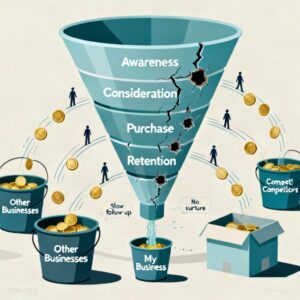 money on ads or content to get someone’s attention, they land on your page, and then they’re gone – because there’s no clear next step and no way to stay in touch.
A funnel changes this by capturing their email in exchange for something valuable, then nurturing them through follow-up emails that build trust until they’re ready to buy. Without it, you’re collecting visitors, not contacts, and visitors disappear.
The ROI difference is stark: that same $100 in ad spend might give you one sale with no funnel, but 5-10x the lifetime value if those contacts enter a structured funnel instead.
Then Add a Paid Membership
Once you’ve built an audience, there’s an interesting recurring-revenue opportunity. You could keep your main articles and newsletter free while offering something like The Supplement Detective Plus for perhaps $7–$12 per month.
Members might receive detailed comparison databases, new-product alerts, price-drop notifications, formulation-change alerts, full research summaries, member-requested product investigations, printable comparison reports and early access to new findings.
Now you’re not asking someone to pay for information they can Google. You’re asking them to pay because you’ve already done hours of annoying work for them. That’s a much stronger proposition.
Creating a Membership Site
• A community feed where members post, comment and like
• Courses and events
• A members directory and private messages
• Points, levels and a leaderboard
You can sell access through your store or let people join for free.
That might sound complicated, but you can build all that within Home Business Academy (a 10 year old company that – in 2026 – added some amazing updates)
Watch what’s included for just $25pcm
You Can Monetize the Same Research Several Ways
This is where the economics get interesting for a solo marketer. Suppose you spend an afternoon deeply researching one ingredient.
That research could become a detailed website article, a YouTube video, five short social posts, a comparison chart, a newsletter issue, several Pinterest graphics, a downloadable checklist, a members-only expanded report and affiliate links to relevant products.
That’s not creating eight separate things from scratch. It’s doing the research once and packaging the value eight ways.
AI can be tremendously helpful here. Use it to organize notes, summarize studies for further verification, create comparison-table structures, brainstorm questions, identify missing information and repurpose your original research.
But don’t outsource the thing people are trusting you for: Judgment.
YouTube Could Be Especially Good for This
Supplements are physical products, which makes them naturally suited to video. Show the bottle. Show the label. Put two products side by side. Explain why their serving sizes make the prices misleading. Walk through a comparison chart. Answer a question you’ve repeatedly seen people asking.
A video titled “$14 Magnesium vs. $42 Magnesium: What’s Actually Different?” has a much stronger curiosity hook than “Everything You Need to Know About Magnesium.”
And you don’t need a television studio. A phone, decent lighting, clear audio and actual knowledge can take you surprisingly far.
Your Customers Can Tell You What to Investigate Next
Here’s an easy content-research system. Read comments under competitor videos. Look at questions on Reddit and other communities. Read one-star, three-star and five-star product reviews. Read Amazon questions. Look at Google autocomplete and related searches.
Pay particular attention when people say: “What’s the difference between…?” “Why does this one cost more?” “Is this the same as…?” “How do I know if…?” “Does anyone make one without…?”
Those aren’t merely content ideas. They’re little signals telling you where confusion exists in the marketplace. And confusion creates opportunities for someone willing to provide clarity.
Don’t Make Medical Miracles Your Business Model
This niche comes with an important responsibility. Be extremely careful with health claims.
Don’t promise that a supplement will cure, prevent or treat a disease when you don’t have a lawful and well-supported basis for saying so. Don’t turn a preliminary study into “Scientists prove…” because it makes a better headline.
Use credible sources. Distinguish between established evidence, preliminary evidence and marketing claims. Clearly disclose affiliate relationships and sponsorships. Learn the applicable FTC and FDA rules before publishing commercially.
And when something isn’t known, say it isn’t known.
Interestingly, this restraint can become part of your brand. Imagine a website whose promise is: “We don’t sell supplements. We investigate them.”
That’s powerful precisely because the niche contains so much hype.
Here’s How I’d Start Small
I wouldn’t begin with 100 supplements. I’d choose one small corner of the market, then identify the 20 questions people repeatedly ask.
I’d buy perhaps five representative products, depending on cost. I’d create one genuinely excellent comparison. I’d create one simple downloadable checklist in exchange for an email address. Then I’d turn that original comparison into articles, videos, emails and social content.
After that, I’d watch. What are people clicking? What questions are they asking? Which comparisons attract traffic? What products are they curious about?
Then I’d create more of what the audience demonstrates it wants.
Remember, you can build a relationship by collecting and emailing your subscribers for just $25 a month with the Home Business Academy Funnel Builder, then consider including the membership site later.
Your First Goal Isn’t $10,000 a Month
Make the first goal much smaller. Can you get 100 genuinely interested email subscribers? Can you make your first affiliate commission? Can you get someone you’ve never met to email you and say: “Can you compare these two products?”
That’s validation.
Then aim for 500 subscribers. Then 1,000. Perhaps manufacturers eventually pay for clearly disclosed sponsorships. Perhaps your comparison database itself becomes the valuable asset.
You don’t need to know exactly where this business ends before you begin.