
When I first heard the phrase vibe coding, I wanted to know whether it was useful or just another AI fad. As a former programmer, I took a short course out of curiosity, not because I expected fast money.
I was surprised by how easy it felt to build small apps with AI helping me along. That opened my eyes to a practical retirement income idea, one that can sit beside affiliate marketing, lead magnets, or part-time client work.
I’ll say up front that I don’t intend to pursue vibe coding as an actual income stream – it seemed a bit too much like my previous career – but read on to see how one student will be doing exactly that.
Key takeaways
- Vibe coding means using AI to help turn a simple idea into a small app or digital tool.
- I see the best retirement income potential in modest projects, not big software dreams.
- The money usually comes from solving one clear problem, not from writing code for its own sake.
- Small tools can support affiliate marketing, be a lead magnet to grow an email list, or become paid services.
- If you would like to try vibe coding yourself, here: you can learn more about vibe coding (affiliate link)
How to think about vibe coding in plain English
I think of vibe coding as telling an AI what I want to build, then working with the result until it does the job. I didn’t need deep coding skills to start, because the AI does the coding, although I still need patience, common sense, and a willingness to test things.
That plain-English view lines up with Google Cloud’s explanation of vibe coding, which describes it as a more accessible way to create software with AI help. For me, the appeal is simple. I can try ideas quickly, learn as I go, and build useful little tools without getting stuck at the blank page stage.
The first app I developed, just to see if I could, was a list of inspirational quotes. No! I don’t need one, I just wanted to check that I could do vibe coding!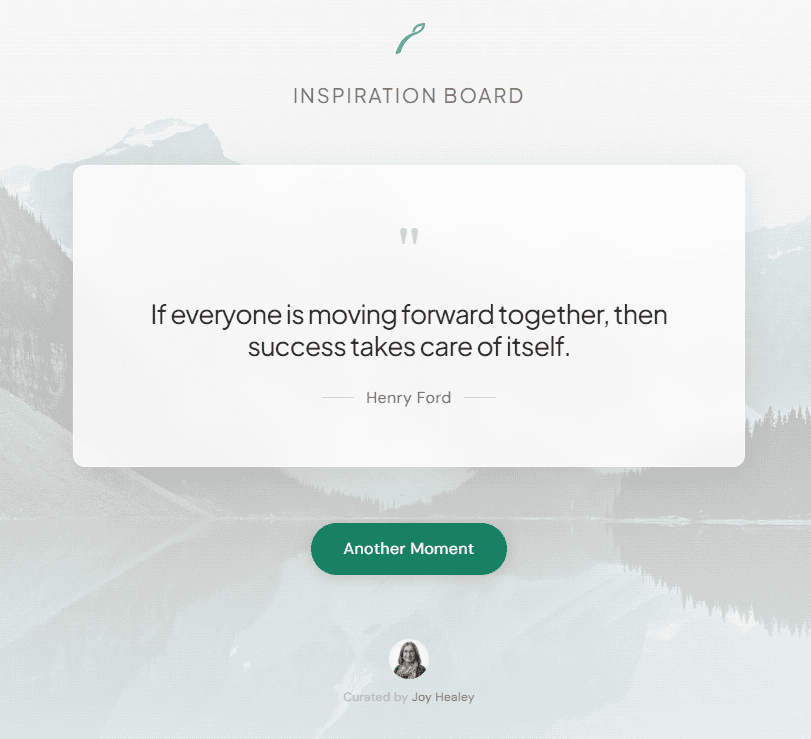
The kind of work vibe coding usually involves
Most of the work is not dramatic. Describe an idea, ask the AI to build a rough version, test what comes back, and then keep improving it. That cycle repeats until the tool is clear, useful, and stable.
My first projects would not be giant apps. They would be simple things like calculators, checklists, planners, trackers, or mini tools that help a reader make a decision. Those are often good lead magnets because they solve a small problem fast.
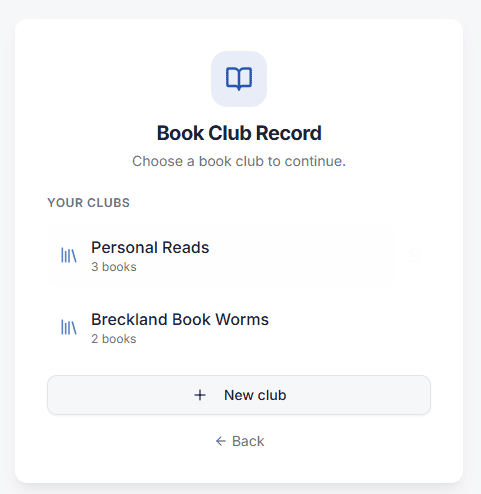
My first useful (to me) app was to record the books I have read, and those for my book club. (Just occurred to me – I can adapt for TV programs watched or to watch. I never remember those.)
Why this feels different from traditional app development
Traditional coding, when I was a computer programmer, started with a lot of setup and a lot of uncertainty. Vibe coding feels lighter because AI can get you from idea to draft in minutes. That speed makes it easier to experiment.
Of course, AI does not remove the need for judgment. You still have to spot errors, test edge cases, and decide what is worth keeping. The tool may write code, but you still have to think.
Why vibe coding appeals to retirees and pre-retirees
What could be most attractive as an income stream in retirement is how it fits round the rest of your life.
If you decide this is something to explore, you can work from home, keep costs low, and choose projects that match your energy and schedule. That matters in retirement, because freedom is often more valuable than raw income.
It also keeps your mind active. If you’ve spent years solving problems, managing people, handling paperwork, teaching, selling, or organizing systems, you already have useful skills. You may not be a tech expert, but you can still spot what people struggle with and what would make their lives easier.
It can start small and grow with confidence
This is one reason it feels approachable. Learn the skill with one tiny project and develop the process without taking a big financial risk. My ‘book club record’ catalogue, a downsizing checklist, or a simple budget tracker for retirees could all start as basic tools.
Each small win builds confidence. I don’t need to build the next major app. I need one working tool that helps a real person.
It can fit around retirement life better than full-time work
A full-time job for extra income sets your schedule. Vibe coding gives you the option to work in short blocks, slow down for family events, or pause during travel. That flexibility is hard to beat.
I also like that the idea can support other income ideas. A small app can be a lead magnet for an affiliate opportunity, a bonus for an email list, or a sample of what you could build for a client. One piece of work can do more than one job.
My most useful (to me) app is a lead magnet. It’s not fully developed yet. I have ideas to give it away as an incentive for my team to take upgrades, with their own ID instead of mine. Or sell it to free members.
Ways to turn vibe coding into income
Vibe coding isn’t a magic money tree. It can be a set of practical income paths.
| Income path | What you might build | How money comes in |
|---|---|---|
| Paid tool | Calculator, tracker, planner | One-time sales or low monthly fee |
| Lead magnet | Quiz, checklist app, scorecard | More email signups, then affiliate or product sales |
| Client service | Custom mini-tool for a business | Project fee |
| Repeatable niche app | Same tool for many users | Ongoing sales |
The income is in the problem solved, not in the code itself.
Sell simple apps or tools to solve one problem well
A small app can earn money if it saves time or reduces confusion. The best ones are narrow. A budget estimate tool, medication schedule tracker, or pet care planner is easier to explain than a giant all-in-one platform.
That focus matters because buyers want quick value. If you can help someone make a decision faster, keep records more easily, or avoid a mistake, the tool has a reason to exist.
Using vibe-coded tools to support affiliate marketing
This is where I think many retirees will find the best fit. My own years around affiliate marketing taught me that people respond better to useful help than to hype. A tool gives that help in a concrete way.
For example, I created a simple niche suggestion tool which I will offer in exchange for an email address. That can strengthen my list, warm up trust, and support later affiliate offers.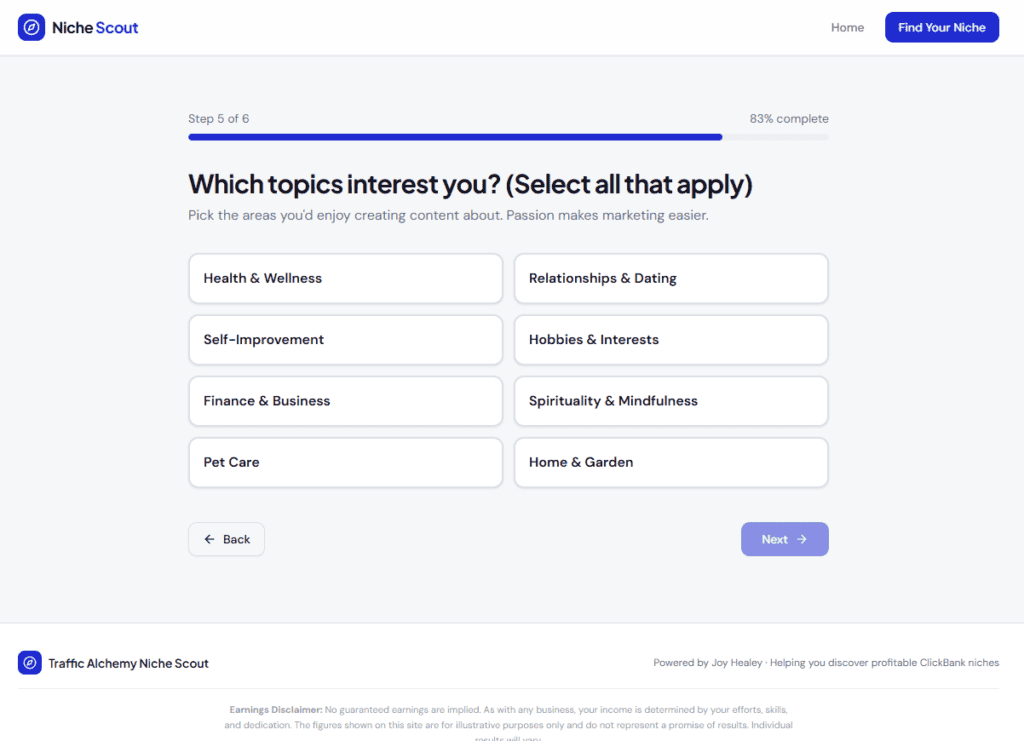
A tool can do more for credibility than several promotional posts, or a PDF that will quickly be forgotten.
Offering your skills as a service
There is also a service angle. Small businesses often need modest tools, not custom enterprise software. They may want a quote calculator, intake form workflow, booking helper, or internal tracker.
I saw this firsthand in the course I took. One member built an app that was far better than most of the rest of us. He then started getting ready to offer app-building services on Fiverr. That showed me how quickly this could move from hobby to side income when the application and interest are strong.
What you need to know before you count on it as retirement income
This idea has limits, so don’t ignore them.
You need time to learn, and a paid subscription to an AI tool. Free versions will quickly run out of credits.
The course I took recommended Replit. While the course was excellent, I found Replit hard to use.
So I started planning my app in my preferred AI tool, Abacus (affiliate link) and it suddenly asked me, “Shall I go on and develop this?”
“Yes please”, I replied and off it went and did it!
Another low cost is a domain of your own. Abacus is hosting my personal tools (book club) for me, but for the NicheScout tool that I plan to use as a business tool, I bought my own domain for a more professional look.
Some projects will stall. Others may work well and still fail to sell.
That is normal. Most small digital products do not take off on the first try. A realistic approach matters more than excitement.
Of course, as ever, that’s down to your lead generation skills. Your own first audience could be your own email subscribers, as you introduce them to a new application to help them.
The skills that matter most are often not technical
Clear thinking beats flashy tech. If I understand my audience, write clear instructions, and choose a problem worth solving, I already have an advantage. Life experience helps here.
I also need to know what people will pay for. Many useful ideas are not marketable, while a plain little tool that saves time often is. Good judgment matters more than fancy features.
Common mistakes that can waste time and money
The biggest trap is chasing tools instead of outcomes. New AI products appear every week, and it is easy to spend more time testing software than building something useful.
Another mistake is building without a clear user in mind. If you can’t say who the tool is for and what pain it removes, you are not ready to build. You also MUST avoid expecting instant income, because that mindset leads to rushed work and bad decisions.
A simple first-step plan to try vibe coding
I would keep my first attempt small enough to finish in a week or two. That keeps the risk low and the learning high.
Start with one tiny problem worth solving
I would choose a problem I already understand. That could come from my own life, former work, or a niche I write about. If I know the audience, I can write better prompts and spot weak ideas faster.
A good first path looks like this:
- Pick one small problem with a clear user.
- Ask an AI tool to create a basic version.
- Test it myself and fix the obvious issues.
- Show it to a few people in the target group.
- Decide whether it should be free, paid, or used as a lead magnet.
Test it before trying to sell it
Feedback saves time. Before putting a price on anything, you want a few people to use it and tell me where they got stuck. That helps me improve the tool and lowers the chance of building something nobody wants. Our student community in the course, did that for us.
You don’t need a huge launch. You need proof that the tool is useful. Once you have that, decide whether to attach it to your blog, email list, affiliate offers, or a freelance service.
Conclusion
- For me, vibe coding was a fun way to learn a new skill and build small lead magnets.
- For anyone who wanted to take it further, it could be a flexible, AI-assisted way to produce small digital tools you can sell to support retirement income.
It is not a shortcut to easy money, so never treat it that way.
The strongest path is usually small. Learn as you go, build tools that solve one clear problem, and use them to support affiliate marketing, lead generation, or client work.
For a retiree who wants part-time income without giving up freedom, that is worth a careful look.
Questions people ask before starting with vibe coding
Is vibe coding hard to learn?
It can feel awkward at first, but the early steps are easier than traditional coding. The harder part is choosing a useful idea and testing it well.
Can retirees really do this without a tech background?
Yes, the course proved that. I think everyone developed something, and at least one person plans to turn this into a side income.
If you can explain a problem clearly, follow a process, and stay patient, you can make progress even without deep technical skills.
How much money can it make?
That varies a lot. Some people may earn a little side income, while others build a stronger service or product line. Treat it as an experiment first, not a guaranteed paycheck.
Is it better as a hobby, side hustle, or business?
For most retirees, I think it starts best as a side hustle or hobby with income potential. That keeps the pressure low and gives you time to see whether the work suits you.
Next Step With Vibe Coding as a Retirement Business?
To explore whether this could be for you, have a look at the video about the vibe coding course I took here (affiliate link)
I did a little coding in tech school. This was decades ago.
Starting small, solving one clear problem and seeking modest gains can work nicely. Trying to think big, going wide and chasing big dreams usually results in disappointment in this niche because the big ventures are incredibly rare. Most of those folks started small, too, but leveraged on seeing potential for massive growth.
I was a programmer for decades – had my own business doing it and loved it.
So, I did enjoy doing this exercise and developed some small apps for myself. Some people on the course developed massive apps, which – as you suggested – led to others giving up in disappointment.
I’m still finishing my own up and will update / or repost when I am finished. But they won’t be massive!