This post may contain affiliate links. If you make a purchase through these links, I may earn a small commission at no extra cost to you.
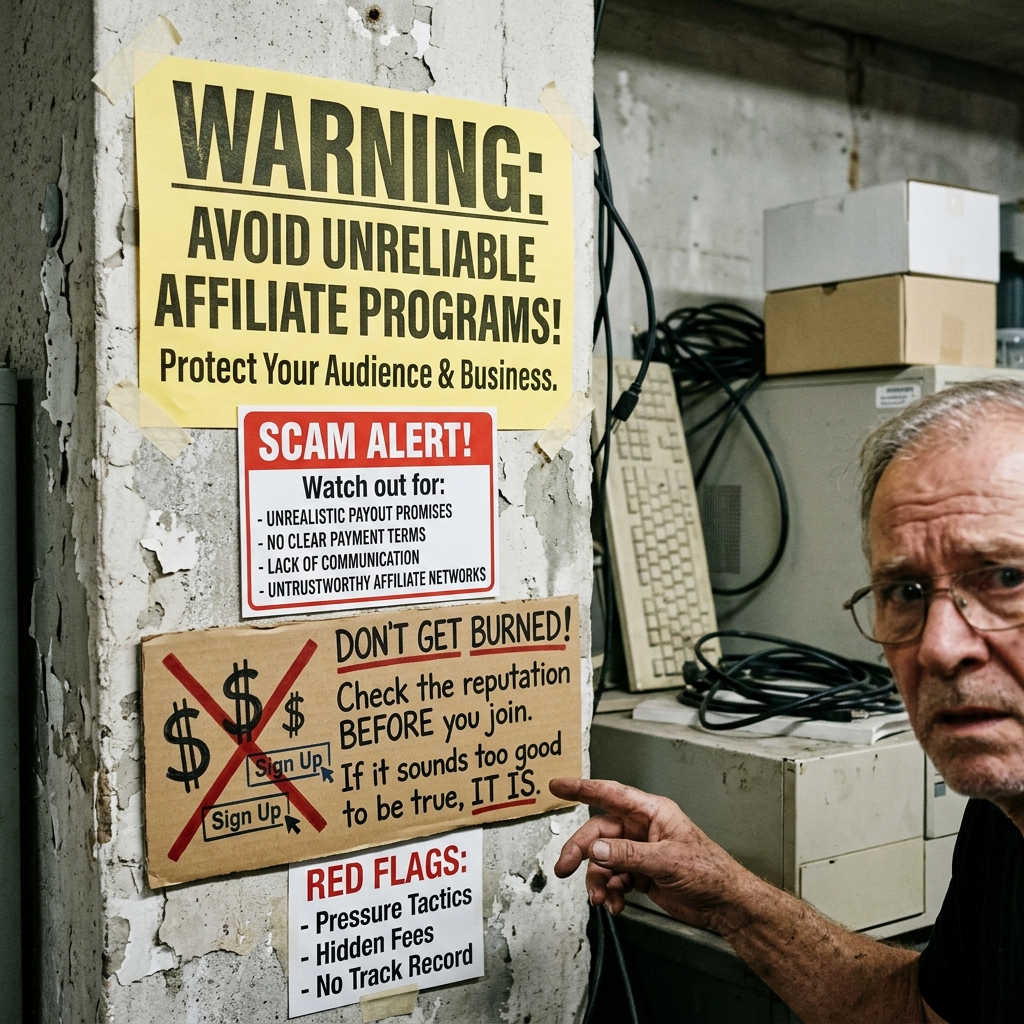
You can spot unreliable affiliate programs by looking past the earnings promises and examining the product, payment terms and support. Offers promising easy money can leave you with wasted time, fees or unpaid commissions.
I struggled with affiliate marketing for years before finding mentors who spoke honestly about the work involved. Income is never guaranteed. Before sharing personal details, paying or recommending anything, give yourself time to investigate.
Key Takeaways
- Guaranteed earnings and rushed decisions are reasons to pause, especially when payment is involved.
- Look for products customers want, clear commission rules and support that answers your questions.
- Protect essential household money, save the terms and start with modest spending.
- Keep honest records and make your affiliate relationship clear to readers.
How to spot unreliable affiliate programs
One warning sign doesn’t prove dishonesty. Several together deserve attention. Stick to observable evidence rather than frightening labels.
There is a very nasty ‘clickbait’ trick that some unethical marketers perform by posting the word ‘scam’ alongside a program name, so unsuspecting prospective purchasers see the program labelled as if it were a scam and then the unethical promoter tells the reader how THEIR program is far better. When I read a post like this, I was nearly prevented from earning commissions on a program that has paid me reliably for about 8 years.
So be wary of Googling for ‘Program Name’ as some reviewers have ulterior motives.
Be wary of guaranteed income and pressure to join
Promises of quick, certain or unusually high earnings deserve scepticism. Countdown timers and disappearing bonuses add pressure, not proof.
Testimonials and commission screenshots show individual cases. They may leave out advertising costs, time spent, refunds and unsuccessful attempts. Don’t treat someone else’s best month as your likely income.
Check whether real customers matter more than recruitment
Would someone buy the product without an opportunity to earn commission? That’s a useful starting point.
Be cautious when most discussion concerns recruiting members, buying qualifying packages or paying ongoing fees. The product needs clear value beyond giving its buyer something else to recruit people into.
Look for clear terms, tracking and responsive support
Vague commission rules, missing payment dates, unexplained reversals and unclear refund terms are concerns. So is a dashboard that doesn’t show useful activity.
A sound programme explains referral tracking and offers accessible support or training. You shouldn’t need a technical background to get a straight answer.
Check the programme before you spend money or share a link
A high commission won’t rescue an unsuitable offer. Work through the details before spending money or putting your reputation behind it.

Research the company, product and payment record
Search the company and product names with “complaints”, “refunds” and “reviews”. Favour detailed independent accounts over praise written to earn a commission.
Look for a real support contact, a product demonstration and evidence it solves a problem. Establish payout dates, minimum thresholds, payment methods and what happens when customers request refunds or sales are rejected.
Read the rules for your location and traffic source
Read eligible-country and promotion rules, including restrictions on email, social media and paid adverts. Understand the cookie window (how long a click can qualify) and who receives referral credit.
A genuine programme can still exclude your audience or traffic. A generous headline payout doesn’t change that.
Save the terms and ask questions before signing up
Save prices, renewal dates, cancellation instructions and refund terms before starting any trial.
Ask support a direct question about commissions or cancellation. Vague copy-and-paste replies or pressure to attend a sales call deserve caution. Use secure account pages for legitimate payment checks. Never send passwords or identity documents through an unsolicited message.
Promote affiliate offers in a way that protects your audience
If time or technical confidence is limited, start with useful, low-cost content rather than buying adverts. Keep the learning manageable.
Track results and treat earnings claims as examples
A simple spreadsheet in Google Sheets can record costs, clicks, conversions, pending commissions and reversals. Pending money isn’t money in your bank.
Results depend on your audience, effort, offer terms and customer retention. Recurring commissions can stop when customers cancel. Keep spending small until demand is clear, and protect money needed for household bills.
Be honest about recommendations and disclose commission
Recommend products you can explain honestly, including their limitations. Your readers deserve information that helps them decide.
The ASA’s affiliate marketing guidance expects advertising to be identifiable. Put a clear disclosure near recommendations and links, using an upfront “Ad” label where appropriate.
Is the return plausible?
Avoid investment or trading schemes promising implausible returns. While crypto programs are not necessarily ‘bad’ I have only known ONE that made me a profit. Every other one lost me money, and I will never join another one. What is worse than losing your own money (in my opinion) is losing money for someone else. It’s one thing if you introduce someone to a genuine opportunity and they do nothing with it, quite a different matter if you introduce someone to a business that then closes down, taking their money with them.
Frequently Asked Questions
Can a legitimate affiliate programme still be a poor choice?
Yes. A real company may offer unsuitable products, impose strict traffic rules or have little appeal for your readers. Legitimacy doesn’t make every offer a good use of your time or budget.
Make sure it is appropriate for your target audience.
Should I pay to join an affiliate programme?
Many programmes are free to join, whilst useful training or tools may cost money. Payment doesn’t create sales or prove quality. Read the full price, renewal and refund terms without letting anyone rush you.
While most programs don’t insist you buy a product before you promote it, some do – and they have a point. How can you promote something if you don’t know anything about it? Some very reputable programs, like the Home Business Academy (aff link), make it a rule that you can only get paid on sales of modules you own.
What should I do if a programme does not pay commission?
Review payment thresholds, validation periods and reversals, then contact support with referral records. If it remains unresolved, stop promoting the offer and consider advice from the affiliate platform.
How many affiliate programmes should a beginner join?
Start with one or two relevant offers and learn their rules. Add more after you understand real audience response. Useful content and reader trust deserve more attention than collecting affiliate links.
The most important skill for an affiliate marketer is traffic generation and list building. You can learn that in this free training (aff link) or there are some free resources here.
Give yourself time to decide
Don’t be afraid to move slowly. Examine the product, company, payment terms and support before committing your money or reputation.
Taking time to investigate is sensible, not a missed opportunity. Affiliate marketing can fit around retirement, but it requires steady effort. No programme can guarantee what you’ll earn.