
If you’re a new affiliate marketer, the real goal on YouTube isn’t “go viral.” It’s getting the right people to find you, trust you, and come back, so they’re comfortable clicking your links when the timing is right.
If tech makes you tense, you’re not alone. You don’t need fancy gear, fast editing, or a big personality. You need a simple system you can repeat without draining your week.
This guide shows a simple YouTube approach that grows views and subscribers, while also building an owned audience you can reach anytime.
Key takeaways you can use today
- Pick one clear channel topic so YouTube knows who to show you to.
- Write titles that match what people already search for.
- Make thumbnails with one main idea and strong contrast.
- Hook viewers in the first 30 seconds, then get to the point.
- Post on a simple schedule you can keep for months.
- Ask for the subscribe right after a quick win.
- Use playlists and end screens to increase watch time.
- Check a few YouTube Studio numbers once a week.
- Never forget to build an email list, so you’re not depending only on YouTube.
Start with a simple channel plan that attracts the right viewers

Many new creators start with variety because it feels safer. A little tech video here, a “morning routine” there, a random product review on Friday. The problem is YouTube can’t tell who the channel is for, so it tests your videos on the wrong people. Those viewers don’t click, don’t watch long, and the video stalls.
Clarity beats variety, especially when you’re using YouTube for affiliate marketing. Your channel should make one promise to one type of viewer. When your videos consistently solve the same kind of problem, the algorithm has an easier job, and so does the viewer.
If you want a beginner-friendly explanation of how YouTube finds and ranks videos, this breakdown of YouTube SEO basics for 2026 is a helpful read. Keep it simple though, your plan matters more than perfect settings.
Pick one viewer, one problem, and one outcome for your videos
Imagine one person watching your videos, not “everyone.” Then build around what they want.
Here are prompts that work well for retirees and older beginners:
- Viewer: Who are they, what’s their comfort level with tech, what do they have time for?
- Problem: What keeps them stuck, confused, or wasting money?
- Outcome: What does “success” look like in 30 days?
Examples of tight channel directions that fit affiliate marketing:
- Beginner-friendly reviews of simple tools (email services, website builders, budgeting apps)
- Step-by-step tutorials (set up a channel, add affiliate links, write a description)
- Side hustle starter steps (first commission, first 100 subscribers, first lead magnet)
A good “promise” sounds like: “Simple online income steps for retirees who hate tech.”
Build a small content map so you never run out of ideas
A content map is just 3 to 5 repeating pillars. Think of it like a meal plan. You don’t cook 50 new recipes a month, you rotate favorites.
Try these pillars for affiliate creators:
- Reviews: “Is this tool worth it for beginners?”
- Comparisons: “Tool A vs Tool B for retirees”
- Tutorials: “How to set it up in 15 minutes”
- Mistakes to avoid: “What I wish I knew earlier”
- Beginner setups: “My simple starter kit (free and paid)”
Now turn each pillar into a series. Series are great because they train people to come back, and they train you to stop overthinking.
Get more views by winning search, suggested videos, and the first 30 seconds
YouTube mainly promotes videos in three places: search, suggested videos, and the home page. You can’t control where your video takes off first, but you can control the two things YouTube reacts to the most:
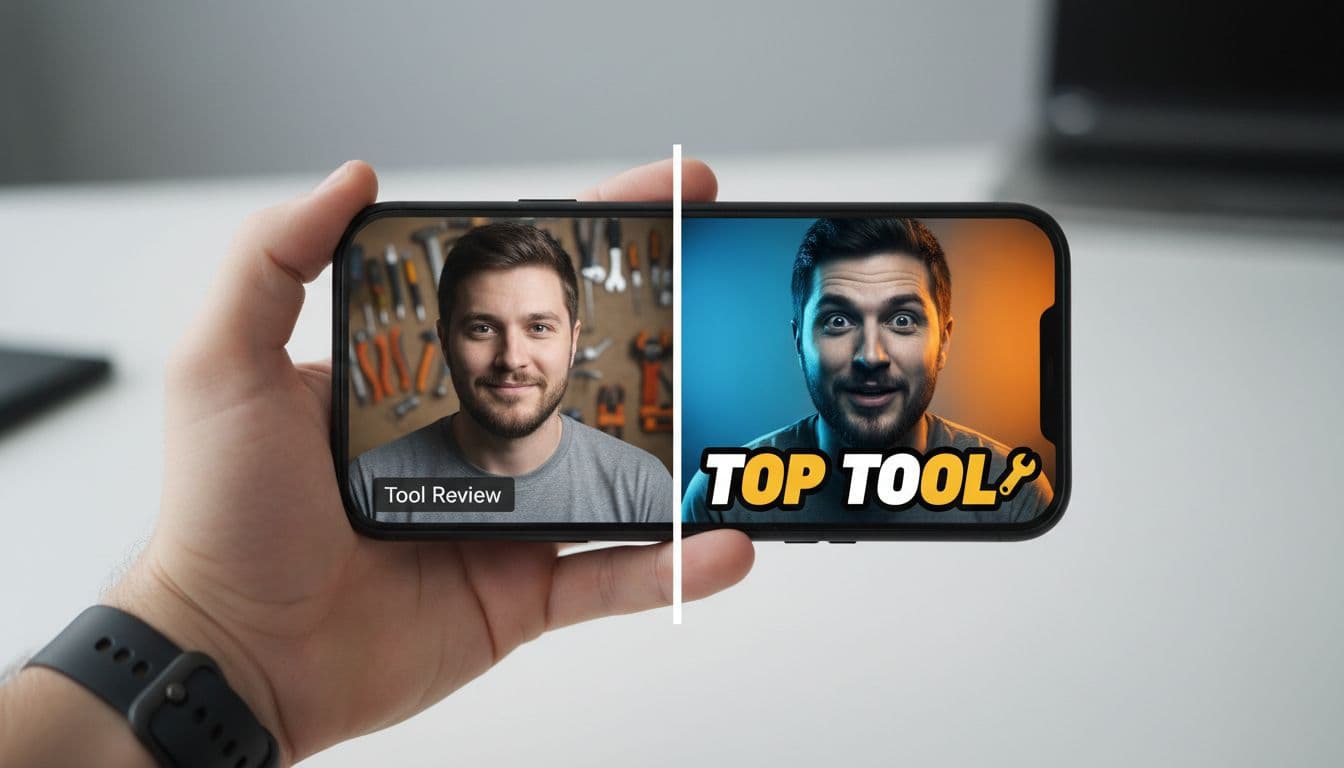
- Packaging (title and thumbnail) gets the click.
- Retention (how long people watch) earns more reach.
Think of it like a bookstore. The cover gets picked up, the first page decides if it’s bought.
A great tool to help you with this is VidIQ (affiliate link). Open a free VidIQ account to try it out.
Make titles and thumbnails that match what people actually search for
Start keyword research inside YouTube. Type a phrase and watch the autocomplete suggestions. Those are real searches. Then check a few channels in your niche and look for videos with strong views compared to their subscriber count.
Keep titles clear. Use numbers only when they help (“in 10 minutes,” “3 mistakes”). Avoid clever titles that hide the topic.
Thumbnail rules that work for beginners:
- One main idea, not five objects and tiny text
- High contrast so it’s readable on a phone
- Few words, if any, and make them big
VidIQ can suggest click-worthy YouTube thumbnails for you.
Use a strong hook, then keep the video easy to follow

Most new creators lose viewers in the first 30 seconds because they start with long greetings, a life story, and “today we’re going to talk about…” Viewers clicked for a reason. Meet that reason fast.
A simple structure that works for affiliate videos:
- Promise: “In the next 5 minutes, you’ll know if this tool is right for beginners.”
- Preview: “I’ll show price, what it does, and the one feature I don’t like.”
- Steps: One point per section, keep it moving.
- Recap: Summarize in 10 seconds.
- Next video: Tell them where to go next.
Other easy wins:
- Show the result early (a quick screen share or before/after).
- Use chapters so people can follow along.
- Cut the intro down to one sentence.
Turn one video into more watch time with playlists and end screens
Watch time is like momentum. One video that leads to another is far more powerful than a single video with a spike of views.
Do these three things on every upload:
- Add the video to a playlist that matches the topic (example: “Affiliate marketing for beginners”).
- Use an end screen to point to the next logical video.
- Pin a comment that says what to watch next and why.
This is how small channels grow without chasing trends. You’re building a path, not hoping people wander around.
Turn viewers into subscribers and leads, so you’re not relying on the algorithm
Subscribers are helpful, but subscribers don’t always see your next upload. That’s why smart affiliate marketers build two assets at the same time: a YouTube channel and an email list.
When I skipped email early on, I learned an expensive lesson. Even when people liked my content, I had no way to reach them later, which meant missed follow-ups and missed commissions. Email fixes that. It gives you a way to support people after the video ends.
Ask for the subscribe in a way that feels natural (not pushy)
Don’t beg for subscribers at the start. Earn it first.
Good moments to ask:
- Right after a quick win (you solved something)
- Mid-video after a key tip
- At the end, paired with the next step
Simple scripts that don’t feel salesy:
- “If you want simple tutorials like this each week, subscribe.”
- “If you’re building a side income in retirement, you’ll like what’s coming next.”
One sentence is enough. Then move on.
Add one simple freebie and build your email list from YouTube
Your freebie doesn’t need to be fancy. It needs to be useful and quick.
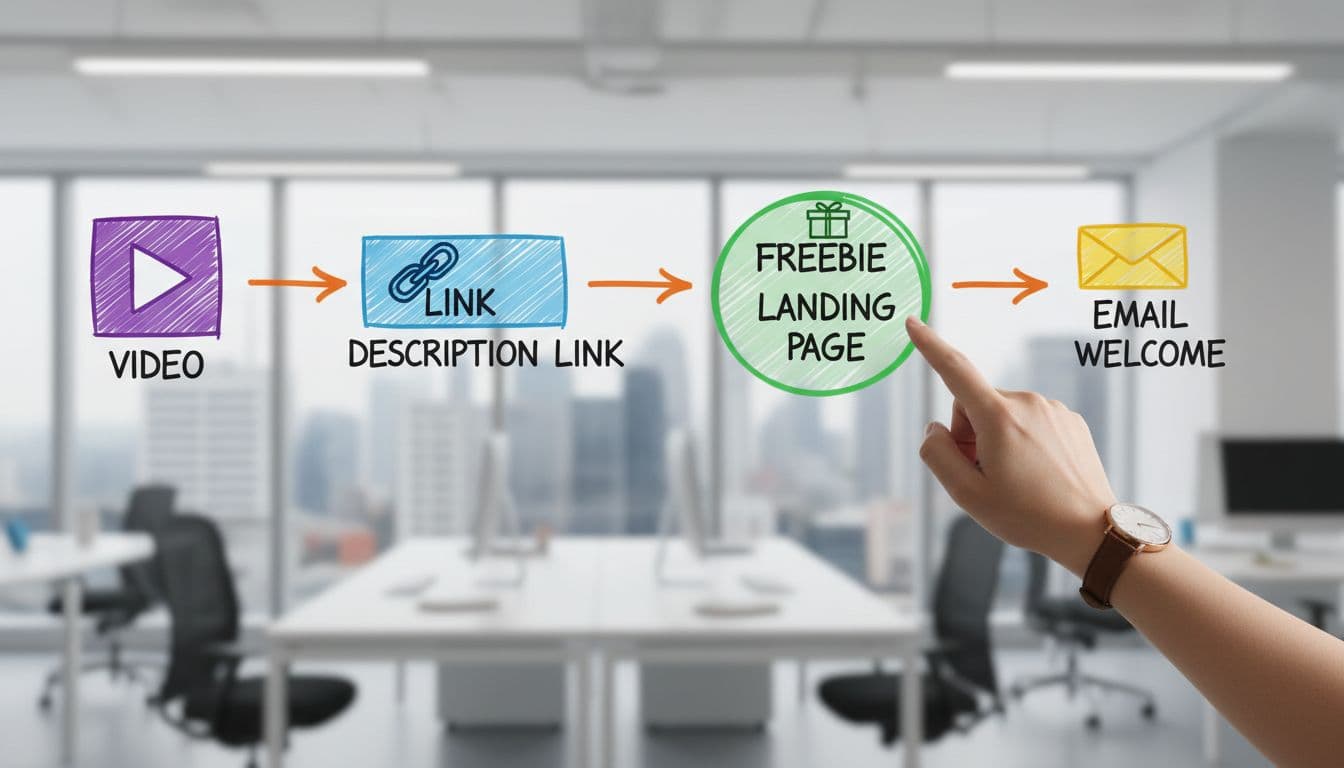
A beginner-friendly funnel:
- Video teaches one topic.
- Description includes one link to a simple landing page.
- Landing page offers a free checklist (PDF or simple Google Doc).
- New subscriber gets a short welcome email and the freebie.
For ideas on setup and best practices, this guide on building a YouTube email list lays out the basics.
Why this matters for affiliates:
- You can follow up when someone isn’t ready to buy today.
- You can send honest tool recommendations later.
- You’re protected when views dip or YouTube changes what it pushes.
A low-stress weekly routine that grows your channel over time
Consistency is what makes YouTube feel like it’s “working.” Not because the algorithm rewards suffering, but because you get more practice, more data, and more chances to be found.
A realistic goal for many retirees is one solid video per week. If that feels heavy, start with two videos per month, but keep the day consistent (like the first and third Tuesday).
Use a repeatable workflow: plan, record, upload, improve
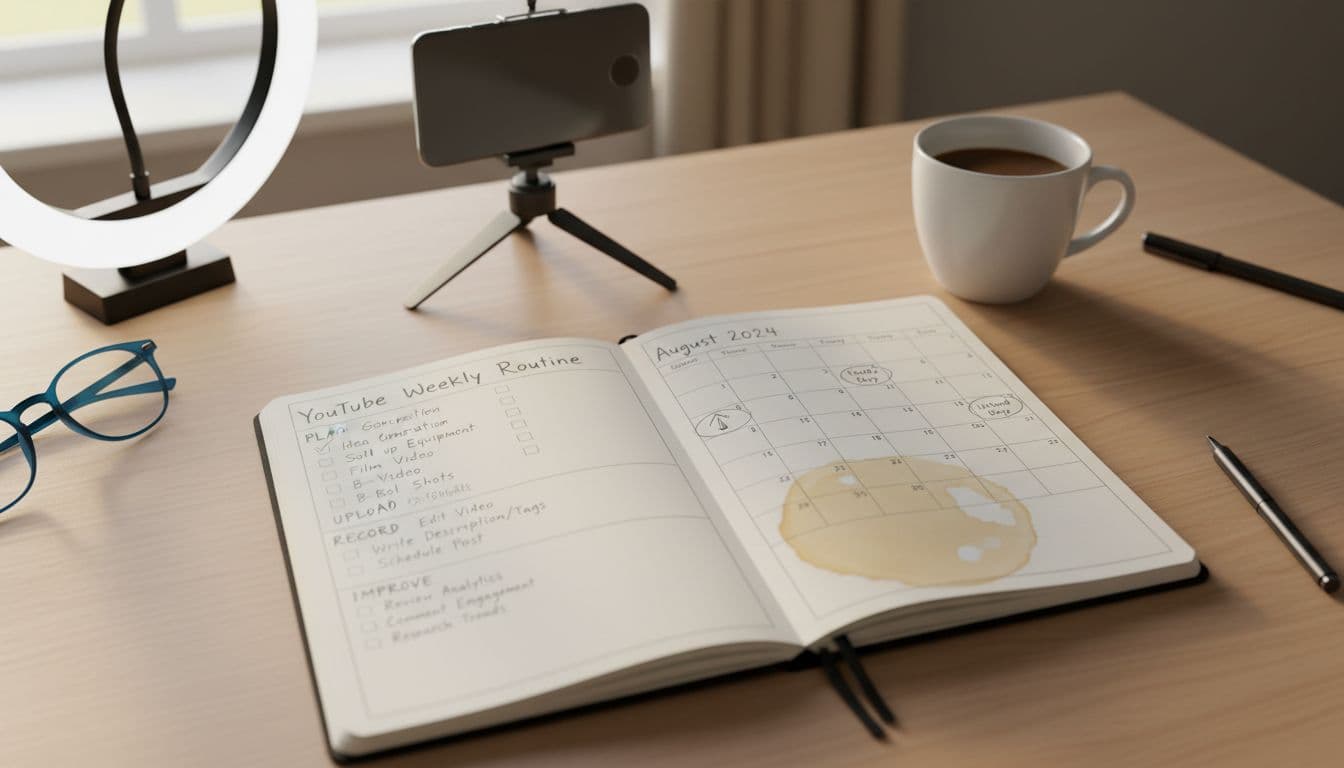
Here’s a calm checklist you can reuse:
- Plan (30 minutes): Pick one keyword idea, outline 5 to 7 bullet points.
- Record (30 to 60 minutes): Phone is fine. Face or no face, both work.
- Upload (30 minutes): Title, thumbnail, description, playlist, end screen.
- Improve (15 minutes): Write one note for next time.
Gear reminder: clear audio matters more than 4K video. A simple lamp near your face often beats fancy cameras.
Track only a few numbers, then make one small change each week
You don’t need to stare at YouTube Studio daily. Once a week is enough.
Watch these metrics:
- Impressions: how often YouTube showed your thumbnail
- Click-through rate (CTR): how often people clicked
- Average view duration: how long they stayed
- Subscribers per video: which topics build loyalty
Weekly habit: pick one video to improve. Test one change, like a clearer title, a tighter first 20 seconds, or a simpler thumbnail.
Frequently asked questions about getting more YouTube views and subscribers
I don’t want to appear on camera!
Start with once a week if you can, or twice a month if you can’t. The best schedule is the one you can keep for 90 days.
How long should my videos be?
Make them as long as they need to be, and as short as you can. Many beginner tutorials do well at 6 to 12 minutes. Reviews can be longer if you stay focused.
Pro-tip: Multi-purpose your videos by splitting them into shorts and posting them to multiple channels. See how
Do I have to show my face?
No. Screen shares, slides, and hands-on demos work fine. If you do show your face, it often builds trust faster, but it’s not required.
Learn how to make faceless videos at https://JoyHealey.com/Fliki
How do I use affiliate links safely on YouTube?
Disclose that links may be affiliate links, and keep it simple. Put the main link near the top of your description, and don’t spam 30 links.
What should I put in my YouTube description?
Add a short summary, your main resource link, a couple supporting links, and a few keyword phrases that match what the video is about. Also include your email freebie link if you have one.
How long does it take to see results?
Most channels need weeks, not days. Many new creators start seeing steady growth after 20 to 40 uploads, if the niche and packaging are consistent.
Do YouTube Shorts help with subscribers?
Shorts can help with reach, but they don’t always build deep trust. Use Shorts to bring people in, then point them to a longer video that solves a full problem.
Should I study YouTube SEO?
Yes, but don’t get stuck there. Spend more time making clear videos for one audience than tweaking settings. VidIQ (affiliate link) will do the heavy lifting for you.
Conclusion
If you want more YouTube views and subscribers as a new affiliate marketer, stick to a simple loop: choose one audience, publish helpful videos on a steady schedule, improve your titles and thumbnails, and keep viewers watching by getting to the point fast.
For the next 7 days, do this: pick one channel topic, write five video titles your audience would search, record one helpful video, and add one clear call-to-action.
YouTube growth feels great, but never forget that building an email list protects you from the ups and downs, and it can save you from the lost commissions that come from relying on views alone.